

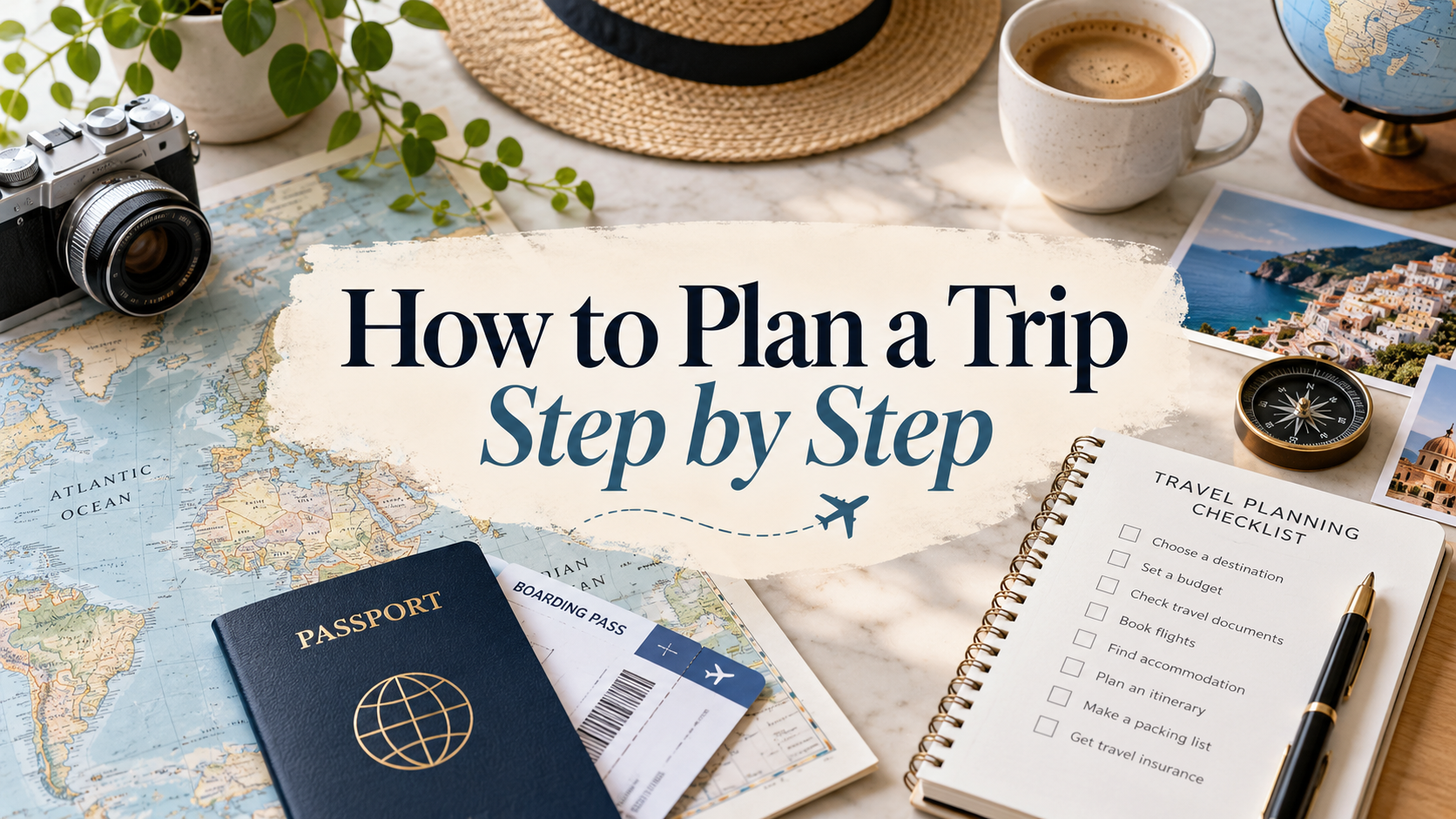

Planning a trip can feel exciting, but it can also become overwhelming when there are too many details to manage at once.
From choosing the right destination and setting a realistic budget to organizing transportation, accommodation, documents, and daily activities, a successful trip often depends on good preparation. The good news is that travel planning does not have to be complicated. With a clear step-by-step approach, you can organize your trip more efficiently, reduce unnecessary stress, and enjoy the journey with greater confidence. In this guide, you will learn how to plan a trip from start to finish using a simple and practical process that works for weekend getaways, family vacations, business trips, and longer adventures
1. Choose the Right Destination
The first step in planning a trip is deciding where you want to go. Your destination should match your budget, available time, travel style, and the type of experience you want. Think about whether you prefer a relaxing beach holiday, a cultural city break, an outdoor adventure, or a family-friendly destination. It is also helpful to consider the weather, local transportation, seasonal crowds, and any entry requirements before making your final decision. Choosing the right destination early makes the rest of the planning process much easier. Once you know where you are going, you can start building a realistic budget, comparing transportation options, and planning the activities that matter most to you.
2. Set a Realistic Travel Budget
A realistic travel budget helps you make better decisions before and during your trip. Start by estimating the major costs, including transportation, accommodation, food, local transportation, activities, and travel insurance. . A clear budget gives you more control over your spending and helps you avoid unnecessary financial stress while traveling. It is also wise to leave some room in your budget for unexpected expenses. Small costs such as baggage fees, airport transfers, tips, and last-minute changes can quickly add up if they are not planned for in advance. Planning your budget before you travel gives you a clearer picture of what you can comfortably afford and helps reduce financial stress during the trip.
3. Choose the Best Time to Travel
The best time to visit a destination depends on several factors, including weather, local events, crowds, and prices. Traveling during peak season may offer ideal conditions, but it can also mean higher costs and busier attractions. If your schedule is flexible, consider traveling during the shoulder season. This period often offers a good balance between pleasant weather, fewer crowds, and more reasonable prices. Checking the seasonal conditions before booking can help you choose travel dates that better match your budget, comfort, and preferred activities.
4. Book Transportation and Accommodation
Once you have chosen your destination and travel dates, the next step is to book your transportation and accommodation. Compare different options carefully and consider location, convenience, cancellation policies, and your overall budget before making a decision. For flights, trains, or other long-distance transportation, booking earlier can sometimes provide more options and better prices. For accommodation, choose a place that is convenient for the activities you plan to do and has reliable reviews from recent guests. Keep all booking confirmations in one place so you can access them easily during your trip. Saving digital copies on your phone and keeping a backup can help you stay organized if plans change.
5. Create a Flexible Travel Itinerary
A good travel itinerary gives your trip structure without making every hour feel rigid. Start by listing the places and activities that matter most to you, then group them by location so you can reduce unnecessary travel time. Leave some open time in your schedule for rest, spontaneous discoveries, or unexpected changes. A flexible itinerary can help you enjoy the trip without feeling rushed. Before each day begins, review your itinerary and confirm important details such as opening hours, reservation times, and transportation options. A quick daily check can help you avoid unnecessary delays.
6. Organize Your Travel Documents
Before you travel, organize all important documents in one place. These may include your passport, visa, travel insurance, booking confirmations, transportation tickets, and any required health or entry documents. It is also useful to keep key emergency information, such as contact details for your accommodation, travel insurer, and local emergency services. It is a good idea to keep both digital and physical copies of essential documents. Store digital copies securely on your phone or cloud storage, and keep printed backups separate from the originals when possible. Before leaving, double-check the expiration dates on your passport and other travel documents, and review the latest entry requirements for your destination.
7. Prepare a Smart Packing List
A smart packing list helps you bring what you actually need without overpacking. Start with the essentials, including clothing, toiletries, medications, travel documents, chargers, and any items required for your destination or planned activities. Check the weather forecast shortly before departure and adjust your packing list if needed. Choosing versatile clothing and packing only what you are likely to use can help you travel more comfortably and keep your luggage manageable. A simple checklist can also help you avoid forgetting important items at the last minute. Review it once before leaving home and again before checking out of your accommodation.
8. Plan for Local Transportation
Understanding how you will get around your destination can save time and reduce stress. Research the available options in advance, such as public transportation, taxis, ride-sharing services, rental cars, or walking routes. If you plan to use public transportation, check whether the city offers travel cards, mobile tickets, or day passes. Knowing how the system works before arrival can make your first day much easier. Save important transportation details, station names, and routes on your phone so you can access them easily during the trip. Having a simple backup plan is also useful if your preferred option is unavailable.
9. Prepare for Safety and Emergencies
Before you travel, take a few minutes to prepare for unexpected situations. Save important emergency contacts, the address of your accommodation, and any local emergency numbers you may need. It is also helpful to keep copies of key documents in a secure place and share your basic travel plans with someone you trust. A little preparation can make it easier to respond calmly if something goes wrong. Before departure, review official travel guidance for your destination and make sure you understand any local safety recommendations, entry rules, or emergency procedures that may affect your trip.
10. Review Your Trip Plan Before You Leave
Before you leave, take a few minutes to review your entire travel plan. Check your transportation details, accommodation bookings, itinerary, budget, travel documents, and packing list one final time. Confirm the most important details, including departure times, addresses, reservation numbers, and any documents you may need at the airport or during check-in. A final review can help you catch small mistakes before they become bigger problems and gives you greater confidence as your trip begins.
Conclusion: Plan Smarter and Enjoy the Journey
Learning how to plan a trip step by step can make travel feel more organized, manageable, and enjoyable. By choosing the right destination, setting a realistic budget, organizing your documents, preparing a flexible itinerary, and reviewing your plans before departure, you can reduce stress and focus more on the experience itself.