



Introduction
A well-organized trip can make the difference between spending your vacation solving problems and actually enjoying the destination.
Small details are often responsible for unnecessary travel stress: arriving at the wrong terminal, forgetting an important document, scheduling two attractions too far apart, or discovering that a place you wanted to visit is closed that day.
The good news is that organized travel doesn’t mean planning every minute of your vacation. In fact, the best travel plans create enough structure to handle the important details while leaving plenty of room for spontaneous experiences.
Whether you’re planning a family vacation, a business trip, or your first international adventure, a few simple travel planning strategies can help you manage your itinerary, documents, packing, transportation, and safety information more efficiently.
In this guide, we’ll walk through seven practical strategies that can help you stay organized before and during your trip — without turning your vacation into a rigid schedule.
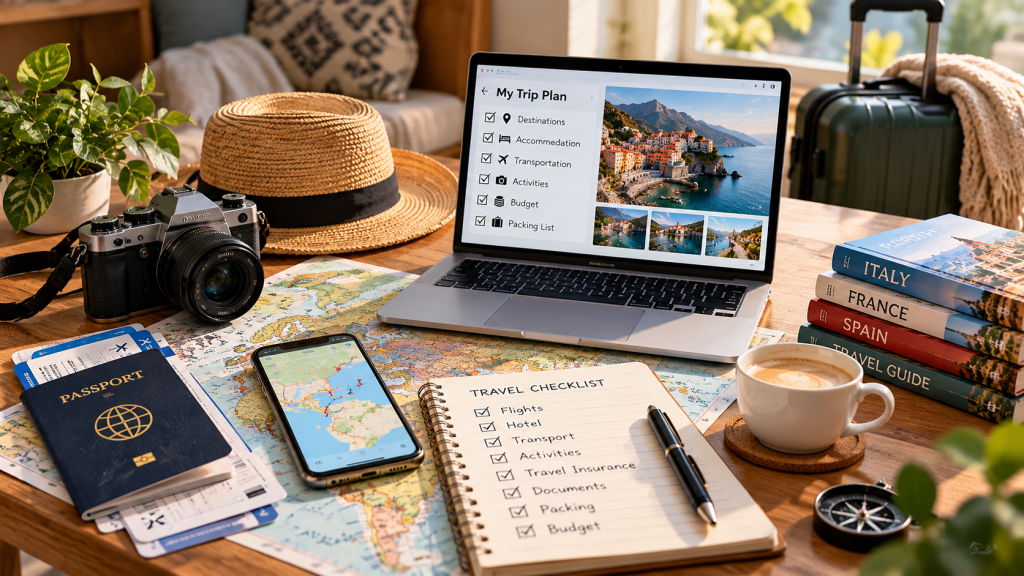
1. Start With a Travel Brain Dump
Before building your itinerary, start by collecting everything you’re interested in doing during the trip.
Create a simple list of potential:
- Attractions and landmarks
- Restaurants and cafés
- Neighborhoods you want to explore
- Day trips
- Shopping areas
- Museums and cultural sites
- Activities for children or family members
- Local experiences you don’t want to miss
At this stage, don’t worry about assigning activities to specific days. The goal is simply to get your ideas out of your head and into one organized place.
You can keep this list in a notebook, spreadsheet, notes app, or digital travel planner. Adding addresses, opening hours, approximate prices, and reservation requirements can make the list even more useful later.
Once you have everything in front of you, it becomes much easier to decide what deserves a place in your final itinerary — and what can remain optional.
2. Build a Flexible Travel Itinerary
One of the easiest ways to create unnecessary travel stress is to schedule too many activities in a single day.
Instead of planning every hour, organize your itinerary around priorities. A simple three-level system can help:
- Priority 1 — Must-do activities: Flights, reserved tours, event tickets, restaurant bookings, or attractions you definitely don’t want to miss.
- Priority 2 — High-interest activities: Places you would really like to visit but can move to another day if necessary.
- Priority 3 — Optional activities: Extra cafés, shops, viewpoints, or attractions you can visit if you have enough time and energy.
When possible, group activities that are located near each other. This reduces unnecessary transportation time and gives you more time to enjoy each destination.
Also leave open space in your schedule. Delays happen, weather changes, attractions take longer than expected, and sometimes you simply discover a place you want to explore for a few extra hours.
A good itinerary should guide your trip — not control every minute of it.
3. Organize Your Important Travel Documents
Important travel information should be easy to find when you need it. Searching through emails at an airport or hotel reception can create unnecessary stress, especially when internet access is limited.
Before your trip, organize essential information such as:
- Passport and identification details
- Flight, train, or transportation confirmations
- Accommodation reservations
- Travel insurance information
- Visa or entry documents when required
- Tour and attraction confirmations
- Emergency contact information
Keep your original documents secure, but consider storing backup copies of appropriate documents in a protected digital location that you can access when needed.
It can also be useful to save important booking details and addresses for offline access on your phone. This way, you can still find essential information if you temporarily lose internet access.
For sensitive documents, use secure storage and avoid keeping unprotected copies in locations that could be easily accessed if your device is lost or stolen.
A few minutes spent organizing your travel documents before departure can save considerable time and stress during your journey.
4. Create a Packing List for Your Specific Trip
A useful packing list should reflect your destination, the weather, the length of your trip, and the activities you have planned.
Instead of relying on one generic checklist for every journey, divide your packing list into simple categories such as:
- Travel documents
- Clothing and shoes
- Toiletries
- Electronics and chargers
- Medications and personal essentials
- Items for children or other family members
- Activity-specific gear
Start your list several days before departure. This gives you time to remember forgotten items and buy anything you still need without rushing at the last minute.
Before closing your suitcase, review the list once more and remove unnecessary items. Packing more doesn’t always mean being better prepared — carrying too much can make transportation more difficult and may lead to additional baggage fees.
Keep your checklist available during the trip as well. Before leaving your accommodation, use it to check important items such as passports, chargers, medications, and electronics.
A personalized packing list makes preparation easier and reduces the chance of leaving something important behind.
5. Organize Your Route Before Each Day
A good itinerary isn’t only about choosing what to see — it’s also about understanding where those places are located.
Before finalizing each day, check your destinations on a digital map and group nearby attractions together. Visiting several places in the same area can reduce transportation costs and prevent you from spending unnecessary hours moving back and forth across a city.
For each day, consider:
- The distance between attractions
- Walking and public transportation times
- Opening and closing hours
- Reservation or entry times
- Where you plan to eat or take breaks
- How you’ll return to your accommodation
Save important locations on your phone before the trip, including your hotel, transportation stations, restaurants, and major attractions.
Offline maps can also be useful when mobile data is unavailable or unreliable.
A few minutes of route planning each evening can make the following day smoother, save valuable travel time, and leave more room for enjoying your destination.
6. Keep Important Safety Information Accessible
Good travel organization also means knowing where to find important information if something unexpected happens.
Before departure, keep a simple record of essential details such as:
- Travel insurance policy information
- Emergency contact numbers
- Contact details for your accommodation
- Local emergency service numbers
- Important medical information you may need while traveling
- Contact information for your country’s embassy or consulate when traveling internationally
Store this information somewhere you can access quickly, and consider keeping essential details available offline in case you don’t have an internet connection.
If you take regular medication, plan ahead so you have an appropriate supply for your trip and keep necessary medication information accessible.
For international travel, it’s also worth checking official travel information for your destination before departure, including entry requirements and relevant safety guidance.
You may never need to use your emergency information, but having it organized and accessible can make a difficult situation much easier to manage.
7. Review What Worked After Your Trip
Travel planning becomes easier with experience. After you return home, take a few minutes to review what worked well and what you would change next time.
Ask yourself a few simple questions:
- Did the itinerary feel comfortable or too busy?
- Which items did you pack but never use?
- Was there anything important you forgot?
- Did you allow enough time for transportation?
- Which planning tools were actually useful?
- Were there unexpected expenses you could prepare for next time?
- Which experiences would you prioritize differently?
Keep a short note with these observations. Before planning your next trip, review it and use what you learned to make better decisions.
You might discover that you prefer fewer activities each day, need a lighter packing list, or should leave more flexibility in your travel budget.
The goal isn’t to create a perfect trip every time. It’s to make each journey a little easier to organize than the one before it.
Conclusion: Organized Travel Creates More Freedom
Organized travel isn’t about controlling every moment of your vacation. It’s about taking care of the important details early so you have more freedom to enjoy the journey.
A flexible itinerary, organized travel documents, a personalized packing list, well-planned routes, and accessible safety information can prevent many common travel problems before they happen.
You don’t need a complicated planning system. Start with the essentials, keep important information in one place, and leave enough flexibility for unexpected discoveries.
Good organization should make travel feel easier — not more restrictive.
And remember that organization also includes your finances. A realistic budget can help you make better decisions before and during your trip while leaving room for the experiences that matter most.
For more practical advice, read our Ultimate Guide to Travel Budgeting to learn how to plan expenses, track spending, and avoid common travel costs.
Plan the important details, leave room for spontaneity, and enjoy the journey.