

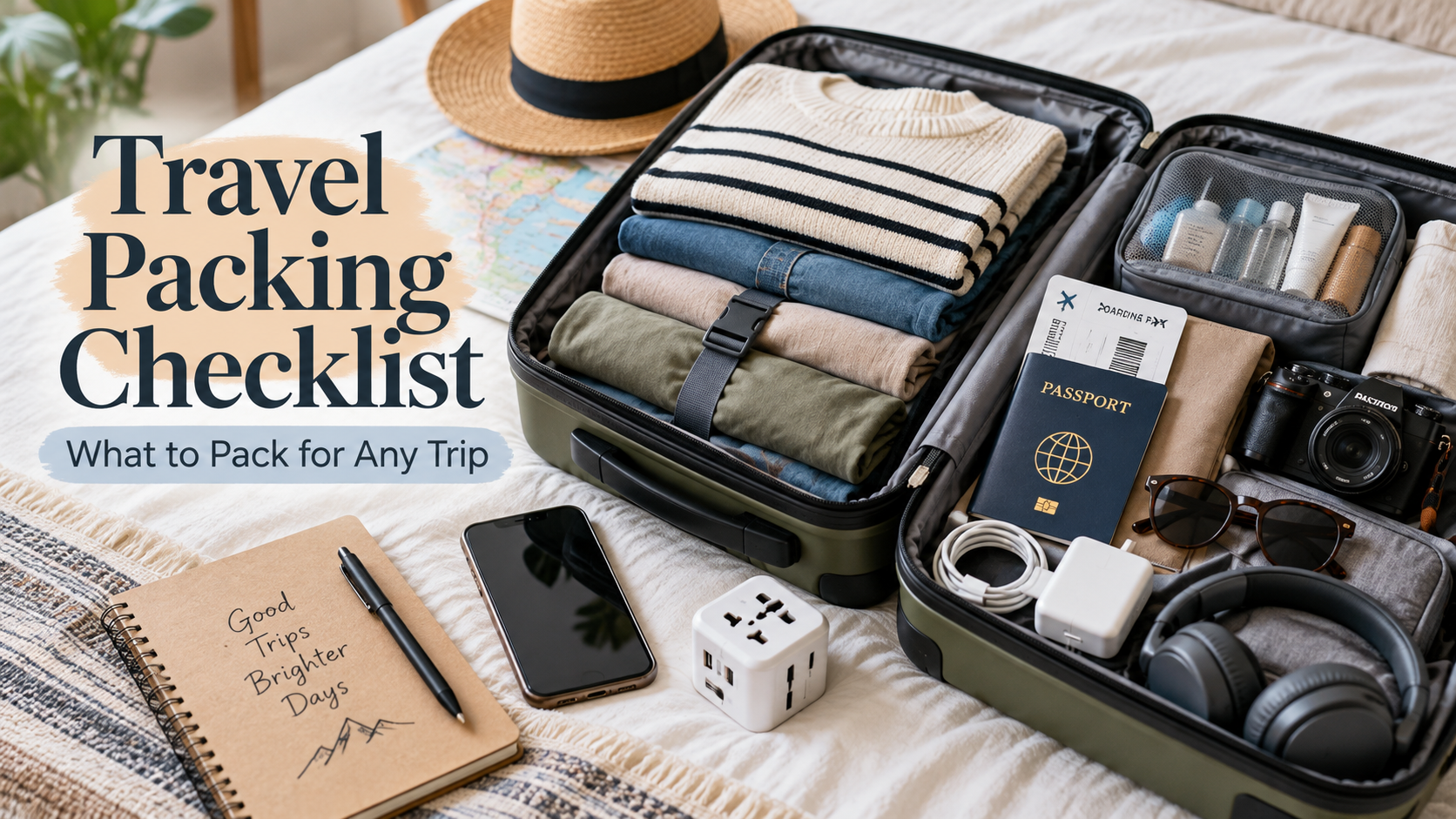

Packing for a trip can be exciting, but it can also become stressful when you are not sure what to bring or what to leave behind. A good travel packing checklist helps you stay organized, avoid forgetting important items, and reduce the chance of overpacking. The key is to prepare according to your destination, trip length, weather, activities, and personal needs. In this guide, you will find a practical travel packing checklist that covers the essentials for most trips while helping you adapt your packing to different destinations and travel styles.
1. Start With the Essentials
Start with the items you cannot travel without. These usually include your passport or ID, wallet, payment cards, phone, medications, travel documents, and any required visas or insurance information.
Keep these essentials in your personal item or carry-on whenever possible, especially items that would be difficult or expensive to replace during your trip.
Before leaving home, check these essential items one more time. A quick final check can prevent unnecessary problems at the airport, hotel, or border.
2. Pack Clothing for Your Destination and Weather
Check the weather forecast for your destination before you pack. Choose clothing that matches the expected temperatures, local conditions, and the activities you plan to do.
Choose versatile pieces that can be mixed and matched, and avoid packing more outfits than you are likely to wear. Layers are especially useful when temperatures may change throughout the day.
Bring comfortable footwear that suits your itinerary, whether you expect long walking days, outdoor activities, formal events, or relaxed sightseeing.
3. Organize Toiletries and Personal Care Items
Pack only the toiletries and personal care items you are likely to use during your trip. Common essentials may include a toothbrush, toothpaste, deodorant, skincare products, hair care items, and any personal hygiene products you regularly need.
If you are flying, check the airline and airport rules for liquids, gels, and aerosols before packing your carry-on. Using travel-size containers can help you save space and avoid problems at security.
Keep toiletries together in a small, leak-resistant bag so they are easy to find and less likely to spill inside your luggage.
4. Pack Your Travel Documents and Money Safely
Keep your passport, identification, payment cards, cash, travel insurance details, tickets, and booking confirmations in a secure and easily accessible place.
It is also a good idea to keep backup copies of important documents and store them separately from the originals in case something is lost or stolen.
Avoid carrying all of your cash and payment methods in one place. Keeping a backup card or a small amount of emergency cash separately can give you extra peace of mind during your trip.
5. Pack Electronics and Chargers
Bring only the electronics you expect to use, such as your phone, camera, tablet, or laptop. Do not forget the correct chargers, cables, power banks, and any adapters needed for your destination.
If you are traveling internationally, check the type of electrical outlets used at your destination and bring a suitable travel adapter if needed. A compact power bank can also be useful during long travel days.
Keep your electronics together in a protective pouch or organizer so cables and small accessories are easy to find and less likely to get damaged.
6. Prepare Medications and Health Essentials
Pack enough prescription medications for your entire trip, along with any essential over-the-counter items you may need. Keep medications in their original labeled containers whenever possible.
If you have a medical condition or allergy, consider carrying a brief note with important information and emergency contacts. It can also help to know how to access medical care at your destination.
Keep a small health kit with basics such as pain relievers, bandages, hand sanitizer, and any personal medical supplies you may need during the trip.
7. Pack for Comfort During the Journey
Long travel days can be tiring, so pack a few small items that make the journey more comfortable. Useful options may include a reusable water bottle, travel pillow, eye mask, headphones, or a light layer for cold airports and airplanes.
Keep a few easy-access items in your carry-on, such as a snack, tissues, lip balm, and any small personal items you may want during the journey.
Choose comfort items that are compact and genuinely useful so they do not add unnecessary weight or clutter to your luggage.
8. Keep Important Items in Your Carry-On
Keep valuables, essential documents, medications, electronics, and one change of clothing in your carry-on whenever possible. These are the items you would want to have with you if your checked luggage is delayed or lost.
If space allows, include a few basic toiletries and other essentials that can help you manage comfortably for a day if your checked bag does not arrive with you.
Before you leave, check that your carry-on meets the airline’s size and weight limits so you can avoid unnecessary fees or repacking at the airport.
9. Double-Check Your Packing List Before You Leave
Before leaving home, go through your packing list one final time and make sure you have all of the essentials for your trip.
Pay special attention to your passport or ID, wallet, phone, chargers, medications, travel documents, and any items that would be difficult to replace once your trip begins.
A final review can help you catch forgotten items before they become a problem and give you greater confidence as you begin your trip.
Conclusion: Pack Smarter and Travel With Confidence
A well-prepared travel packing checklist can make your trip easier, more organized, and less stressful. By focusing on the essentials, packing for your destination, keeping important items accessible, and reviewing your luggage before departure, you can avoid common packing mistakes and travel with greater confidence.