



Travel should be exciting, not overwhelming. Yet without a clear plan, even a dream vacation can quickly turn into a stressful experience.
From organizing your itinerary and managing your travel budget to packing the essentials and keeping important reservations in one place, a little preparation can make a big difference.
Whether you’re planning a family vacation, a business trip, or your first adventure abroad, stress-free travel planning helps you spend less time worrying about the details and more time enjoying the journey.
The good news is that you don’t need to plan every minute of your trip. A simple, flexible system can help you stay organized while still leaving plenty of room for spontaneous experiences.
In this guide, you’ll learn practical ways to plan a smoother, more organized trip — without taking the fun out of travel.
When Excitement Meets Chaos
Most trips begin with excitement. You book your flights, reserve your accommodation, and start imagining the places you’ll explore.
But as departure day gets closer, practical questions begin to appear:
- Did I pack everything I need?
- Are all my reservations confirmed?
- Which attractions should we visit first?
- How much should we budget for each day?
- Do we have enough time between activities?
- Where are our passports, tickets, and important travel documents?
Without a simple system for organizing these details, excitement can quickly turn into unnecessary stress.
For families, planning becomes even more important. Parents may need to organize children’s clothing, medication, entertainment, documents, meals, and activities while keeping the trip enjoyable for everyone.
Business travelers face a different challenge. Flights, meetings, transportation, accommodation, and important documents often need to fit into a tight schedule.
First-time travelers may feel overwhelmed simply because they don’t yet know what needs to be prepared.
The solution isn’t to plan every minute. It’s to organize the important details early enough that you can enjoy the trip with confidence.
The Difference Between a Good Trip and a Great One
A great trip doesn’t require a complicated schedule. What matters is knowing the essentials before you leave.
Start by organizing five key areas:
- Your itinerary: Decide which places and activities matter most, but leave some free time for rest and unexpected discoveries.
- Your travel budget: Estimate the cost of accommodation, transportation, food, activities, and daily expenses. Keep a small amount aside for unexpected costs.
- Your packing list: Create your checklist several days before departure instead of packing everything at the last minute.
- Your reservations and documents: Keep flight details, accommodation confirmations, travel documents, and important contact information easy to access.
- Your daily priorities: Avoid trying to fit too many activities into one day. Choose the experiences that matter most and give yourself enough time to enjoy them.
These simple steps reduce last-minute decisions and give you a clearer picture of your trip before it begins.
Good travel planning isn’t about controlling every moment. It’s about preparing the essentials so you have more freedom once you arrive.
Stress-Free Travel Planning Creates More Freedom
Planning may sound restrictive, but good travel planning actually gives you more freedom.
When the essential details are organized before departure, you don’t need to spend valuable vacation time searching for confirmation emails, deciding what to do next, or worrying about whether you forgot something important.
A flexible itinerary can be especially useful. Instead of scheduling every hour, choose one or two priorities for each day and leave open time between them. This gives you room to rest, explore an unexpected neighborhood, stay longer at a place you enjoy, or change your plans when necessary.
The same principle applies to your budget. Knowing approximately how much you can spend each day helps you make decisions without constantly worrying about money.
Your packing list also removes unnecessary uncertainty. When essential items are checked off before you leave, you can start your journey knowing that the important things are already taken care of.
The goal isn’t a perfect schedule. It’s to create enough structure that you can focus on what travel is really about: discovering new places, spending time with the people you care about, and creating memories.
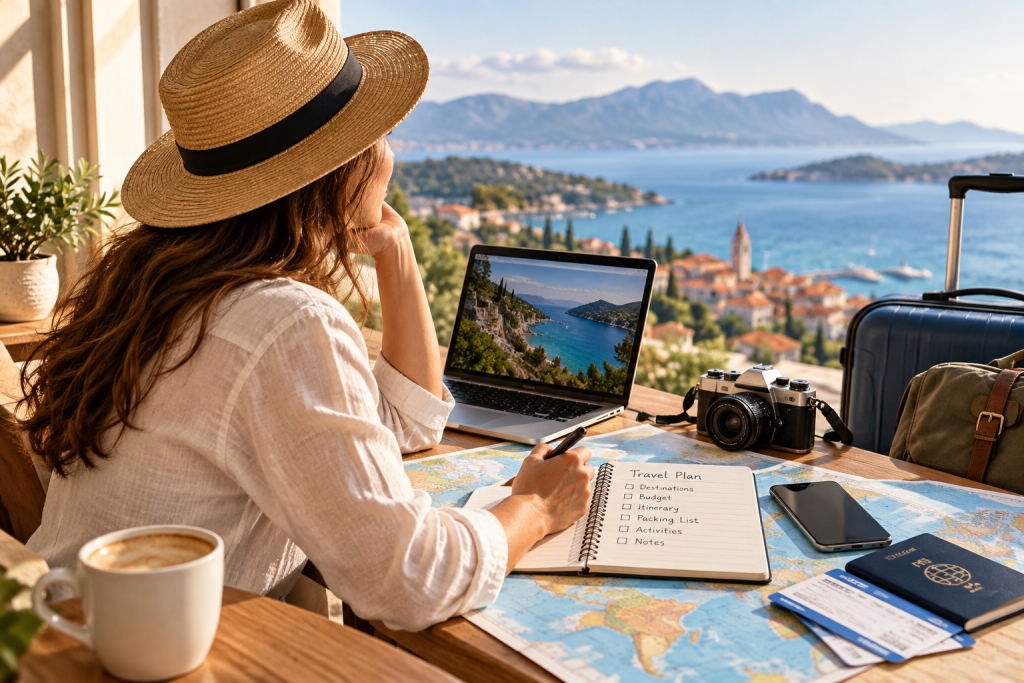
Small Preparation, Big Difference
You don’t need a complicated system to stay organized while traveling. A few simple preparations can prevent many of the problems that cause stress during a trip.
Before you leave, create one place where you can easily find the most important information about your journey. This could be a digital travel planner, a document on your phone, or a printed folder.
Include the essentials:
- Flight or transportation details
- Accommodation addresses and confirmation numbers
- A simple daily itinerary
- A packing checklist
- Your estimated travel budget
- Emergency and important contact information
- Copies of essential travel documents
- Notes about activities or places you want to visit
It’s also useful to keep important information available offline. Internet access may be unreliable while traveling, so save essential addresses, booking details, and transportation information on your phone before departure.
Finally, do a quick check one or two days before your trip. Confirm important reservations, review your documents, check your packing list, and make sure you know how you’ll get from your arrival point to your accommodation.
These small preparations take relatively little time, but they can make the entire journey feel calmer and more organized.
Common Travel Planning Mistakes to Avoid
Even organized travelers can make planning mistakes. Avoiding a few common ones can make your trip much easier.
Planning too many activities
Trying to see everything can leave you exhausted. Allow extra time between activities and remember that transportation, meals, queues, and unexpected delays can take longer than expected.
Packing at the last minute
Last-minute packing makes it easier to forget important items. Start your packing list several days before departure and check it again the day before you leave.
Ignoring unexpected expenses
Your travel budget should include some flexibility for transportation changes, extra meals, small fees, or other unexpected costs.
Keeping important information in only one place
Don’t rely entirely on internet access or a single email account. Save essential booking details and important information somewhere you can access offline.
Creating an itinerary with no free time
A good itinerary should guide your trip, not control it. Leave some space for rest, spontaneous discoveries, and changes in plans.
Avoiding these simple mistakes can help you travel with more confidence and spend less time solving preventable problems.
Travel Should Feel Easy
Travel planning doesn’t have to be complicated. The goal is simply to organize the important details before you leave so you can spend more time enjoying the experience once your journey begins.
Start with the essentials: create a flexible itinerary, set a realistic budget, prepare your packing list, organize your reservations and documents, and leave enough free time for unexpected discoveries.
A few minutes of preparation today can prevent hours of unnecessary stress later.
Most importantly, remember that a travel plan is there to support your journey — not control it. Some of the best travel memories come from unexpected moments that were never included in the itinerary.
Prepare what matters, leave room for adventure, and enjoy the journey.