

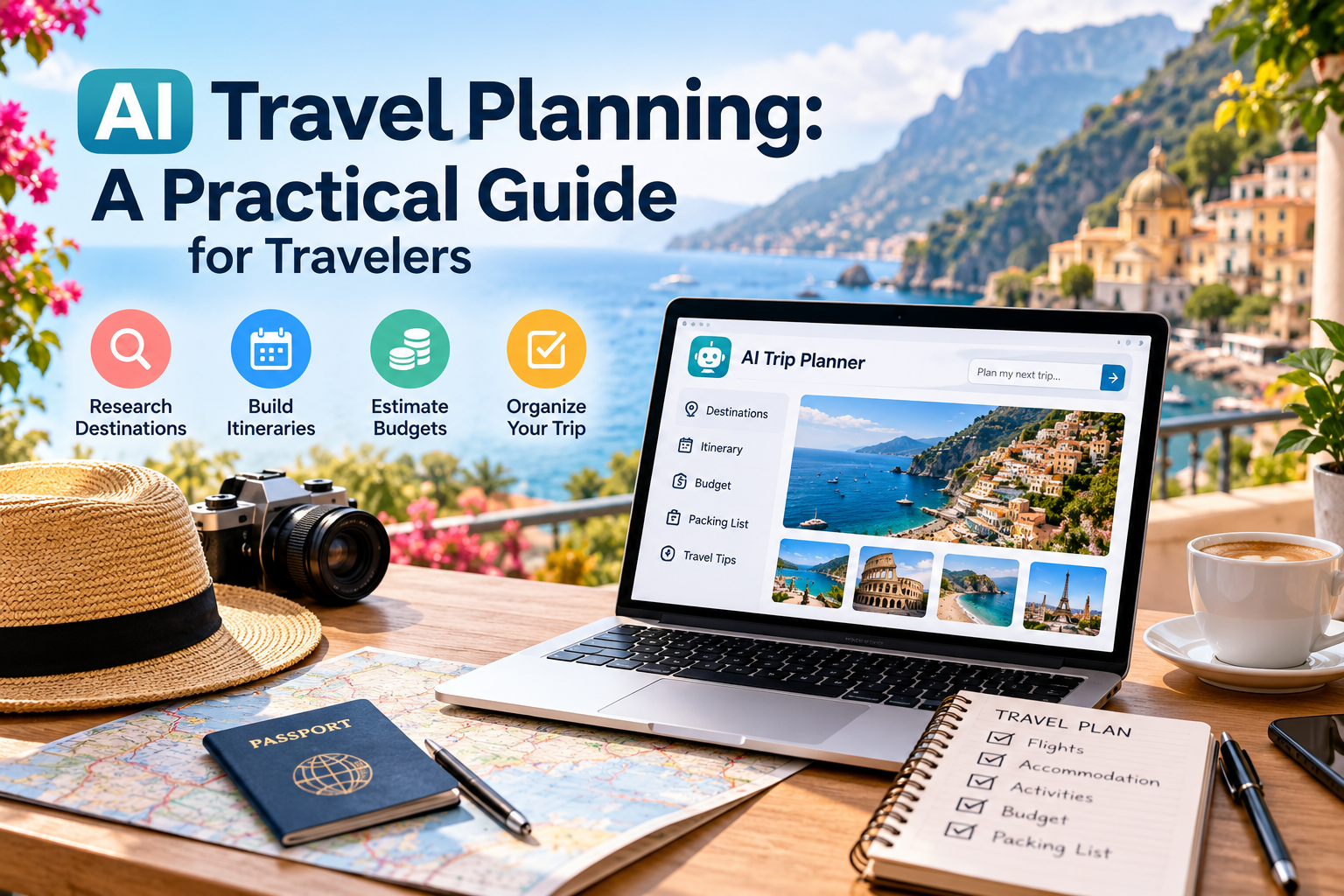

Artificial intelligence is becoming a useful tool for travelers who want to research destinations, compare options, organize ideas, and build more efficient travel plans.
When used carefully, AI can help you save time and generate useful ideas, but it should support your travel planning rather than replace reliable sources or your own judgment.
In this guide, you will learn practical ways to use AI for travel planning while keeping your information accurate, organized, and useful for a real trip.
1. Use AI to Research Destinations
AI can help you explore destinations by suggesting places that match your interests, budget, travel dates, and preferred activities.
Instead of searching dozens of websites from scratch, you can ask AI to compare destinations, suggest activities, or organize options based on the type of trip you want.
Use these suggestions as a starting point, then verify important details such as opening hours, entry requirements, seasonal conditions, and local transportation using reliable sources.
2. Build a Smarter Travel Itinerary With AI
AI can help you turn a list of places and activities into a more practical daily itinerary by grouping nearby attractions, estimating a logical order, and suggesting a reasonable pace.
You can give AI your travel dates, accommodation area, must-see attractions, preferred pace, and any fixed reservations, then ask it to suggest a day-by-day structure.
Always review the suggested itinerary before using it. Check travel times, opening hours, reservations, and local conditions so the plan matches real-world information.
3. Create a Travel Budget With AI
AI can help you estimate the main categories of a travel budget, including transportation, accommodation, meals, activities, and daily expenses.
Share your destination, trip length, travel style, and approximate spending limit to generate a starting budget, then compare those estimates with current prices from reliable booking and travel websites.
Treat AI-generated prices as estimates rather than confirmed quotes. Costs can change by season, availability, location, and personal preferences, so verify the details before making reservations.
4. Build a Personalized Packing Checklist
AI can help you create a packing checklist based on your destination, weather, trip length, planned activities, and access to laundry.
Ask it to separate essentials from optional items, and adapt the list for a family trip, business travel, outdoor activities, or a short weekend away.
Review the list against airline baggage rules and your actual needs so you do not pack unnecessary items or overlook important documents and medications.
5. Compare Transportation and Accommodation Options
You can use AI to identify factors worth comparing, such as location, travel time, cancellation terms, amenities, public transportation access, and total cost.
Ask for a comparison table based on your priorities, but confirm prices, availability, policies, and reviews directly with the providers before booking.
AI can help organize your choices, but it cannot guarantee that an offer is current or that a property or service will meet your expectations.
6. Use AI to Organize Travel Documents and Information
AI can help you build a checklist of documents and information to prepare, such as passport details, visa requirements to verify, booking confirmations, insurance contacts, and emergency numbers.
Avoid entering sensitive personal information, passport numbers, payment details, or private booking codes into tools that are not appropriate for storing them.
Keep copies of important information securely and verify entry requirements through official government or embassy sources because requirements vary by nationality and destination.
7. Ask AI to Adapt Plans When Things Change
Travel plans can change because of weather, delays, closures, or unexpected opportunities. AI can help you brainstorm alternatives or reorganize activities around a new schedule.
Provide only the details needed to explain the change, and ask for several practical alternatives that match your available time and budget.
Before acting, confirm current transport updates, opening hours, weather alerts, and booking conditions with the relevant official or service provider.
8. Use Clear Prompts for Better Travel Suggestions
AI usually gives more useful suggestions when your request includes clear context, practical limits, and the type of answer you want.
For example, include your destination, dates, budget range, interests, travel companions, mobility needs if relevant, and preferred pace. Ask for a simple day-by-day plan and request that uncertain details be clearly identified.
If the first result is too broad, refine your request with more specific priorities instead of accepting a generic itinerary.
9. Verify AI Travel Advice Before You Rely on It
AI can produce outdated, incomplete, or inaccurate information, especially about prices, schedules, entry rules, and local conditions.
Confirm important details through official tourism sites, government travel advisories, airlines, accommodation providers, and transport operators before making decisions.
Use AI to organize information and generate ideas, but rely on current, authoritative sources for decisions that affect safety, money, or travel eligibility.
10. Combine AI With a Travel Planner
Once you have researched your destination and developed a draft itinerary, put the final details into one organized travel plan.
A travel planner can help keep your daily schedule, budget, packing checklist, reservations, and important notes together instead of scattered across different conversations and apps.
AI can support the research and brainstorming process, while a well-organized planner helps you keep track of the decisions you have confirmed.
Conclusion: Use AI to Plan Smarter, Not Blindly
AI can make travel planning more efficient by helping you research destinations, structure itineraries, estimate budgets, and organize checklists. The best results come when you combine clear prompts with your own judgment and verify important information through reliable sources. Use AI as a planning assistant, keep sensitive details protected, and confirm the facts before booking so you can travel with greater confidence.