

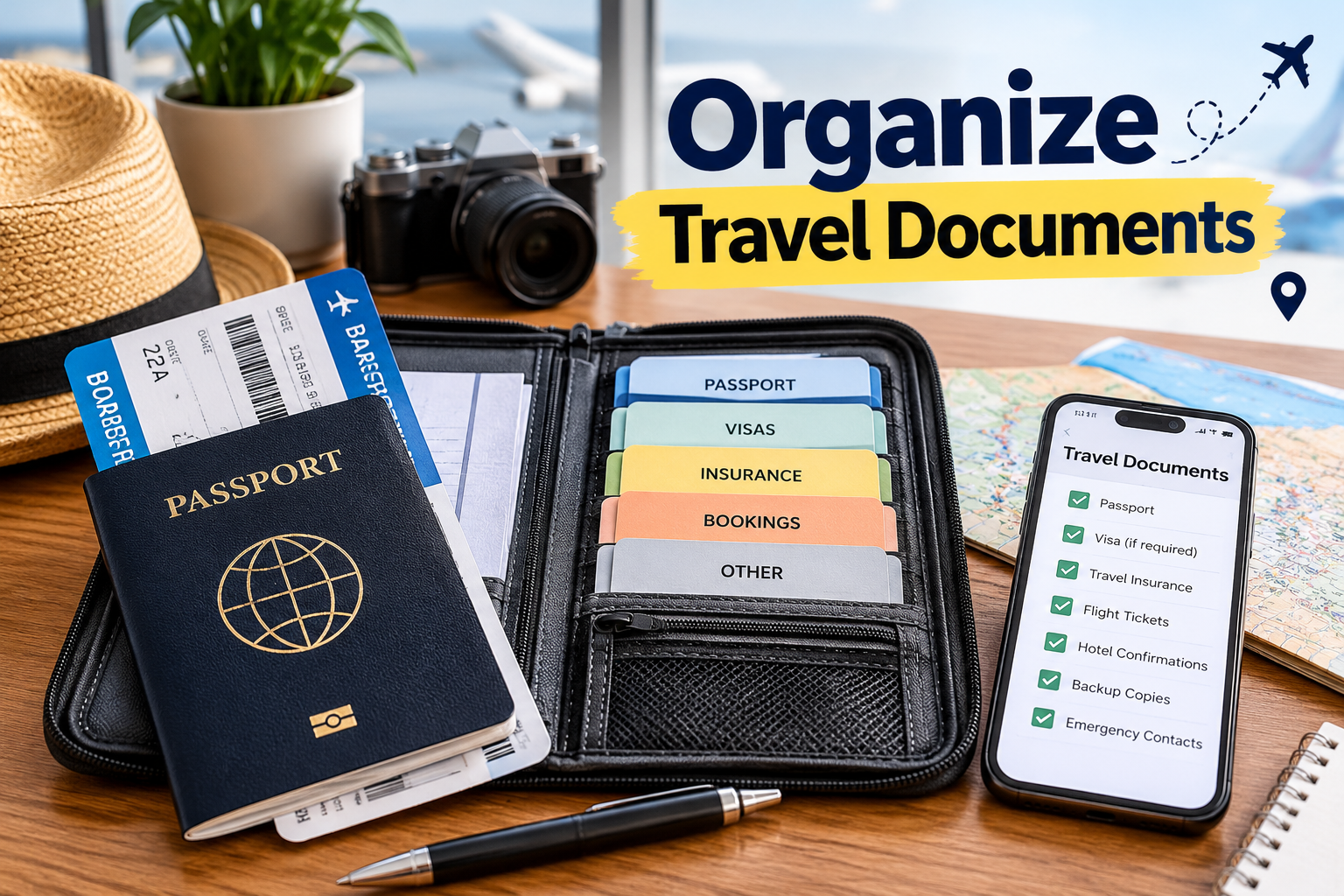

Learning how to organize travel documents before your trip can save you time, reduce stress, and help you avoid unnecessary problems while traveling.
Passports, visas, travel insurance details, booking confirmations, transportation tickets, and emergency information can quickly become difficult to manage if they are scattered across emails, apps, and paper copies.
A simple document system can help you keep everything easy to find before and during your trip. In this guide, you will learn how to organize your travel documents clearly, securely, and efficiently.
1. Start With the Essential Travel Documents
Begin by making a list of the travel documents you are most likely to need. These may include your passport, visa, travel insurance, flight or train tickets, hotel confirmations, and any required entry documents.
Check that each document is current, accurate, and valid for your travel dates. Pay special attention to passport expiration dates, visa requirements, and any destination-specific entry rules.
Keep your most important documents together in one dedicated folder, wallet, or digital location so you can access them quickly when needed.
2. Create Digital Copies of Important Documents
Create digital copies of your passport, visa, travel insurance, tickets, and important booking confirmations before you leave.
Store these copies securely on your phone, in encrypted cloud storage, or in another protected location that you can access if the originals are lost or unavailable.
Keep your digital backups organized with clear file names so you can find the right document quickly when you need it.
3. Keep Paper Copies as a Backup
Even when you store documents digitally, keeping a few paper copies can still be useful. Printed backups are especially helpful if your phone battery dies, your device is lost, or internet access is unavailable.
Keep paper copies separate from the original documents whenever possible, so you still have access to important information if your main document wallet is lost or stolen.
Label your paper copies clearly and keep only the documents you are likely to need, so your backup folder stays simple and easy to manage.
4. Organize Booking Confirmations in One Place
Keep all booking confirmations together, including flights, trains, hotels, rental cars, tours, and activity reservations. Having everything in one place makes it easier to check times, addresses, and confirmation numbers during your trip.
Use clear folder names or labels so you can quickly find the right confirmation when needed. You can organize them by category, date, or destination, depending on what feels easiest for you.
Before departure, review your booking confirmations one more time and make sure the dates, names, and locations are correct.
5. Store Emergency Information Separately
Keep important emergency information separate from your main travel documents. This may include emergency contacts, travel insurance details, your accommodation address, and local emergency numbers.
Save this information somewhere you can access quickly, even if your phone is unavailable. A small printed card or a secure offline note can be useful during an emergency.
If you are traveling internationally, consider noting the contact details for your embassy or consulate as an additional backup in case you need assistance.
6. Keep Travel Insurance Details Easy to Access
Keep your travel insurance policy number, provider contact details, coverage information, and emergency assistance number somewhere easy to access during your trip.
Save a digital copy of your policy and any instructions for making a claim, so you know what to do if you need medical care, lose belongings, or experience a covered travel disruption.
Keep the most important insurance details with your other essential travel documents so they are easy to find when you need them.
7. Organize Transportation Documents
Keep transportation documents together, including flight tickets, train reservations, boarding passes, rental car details, and airport transfer confirmations.
Check departure times, terminal or station information, seat details, and transfer arrangements before your trip so you are not searching for this information at the last minute.
Keep digital and printed transportation details organized by date so you can quickly find the information you need at each stage of your journey.
8. Review Entry Requirements Before You Travel
Before you travel, check the latest entry requirements for your destination. These may include passport validity rules, visa requirements, proof of onward travel, health documents, or other entry conditions.
Use official government or embassy websites to confirm current requirements, because entry rules can change and may differ depending on your nationality and destination.
Check these requirements again shortly before departure and keep any required documents easy to access during your journey.
9. Keep Your Travel Documents Easy to Access
During your trip, keep the documents you may need most often in a secure but easy-to-reach place. This may include your passport, boarding passes, hotel confirmations, transportation tickets, and insurance information.
Avoid placing every important document in the same pocket or bag. Keeping a backup copy or secondary access point can help if your primary document holder is lost or stolen.
Organizing your documents so they are secure and easy to reach can save time at airports, hotels, border checks, and transportation stops.
10. Do a Final Document Check Before Departure
Before leaving home, review all of your essential travel documents one final time. Make sure your passport, visa, tickets, booking confirmations, insurance details, and any required entry documents are ready and easy to access.
Check that names, dates, destinations, and reservation details are correct, and make sure any digital copies are available offline if you may not have internet access.
A final document check can help you catch small mistakes before they cause delays and gives you greater confidence as your trip begins.
Conclusion: Keep Your Travel Documents Organized and Ready
Organizing your travel documents before departure can make your trip smoother, safer, and less stressful. By keeping essential documents together, creating secure backups, reviewing entry requirements, and checking everything one final time before you leave, you can avoid unnecessary delays and travel with greater confidence.